
Custom Cleanroom Silicone Rubber Rollers
Precision custom silicone rollers – low outgassing, high purity.
- 30–500 kg load
- 30–90 Shore A hardness
- 10–400 mm dia
- -50–+200°C temp
- ISO 9001 & REACH cert
Showing 1–16 of 130 results
-
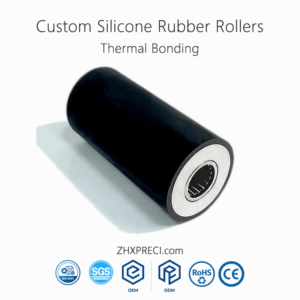
Black PU Rubber Coated Wheel Roller Industrial Grade for Automation Machinery Conveyor Transport and Factory Use
Read more -
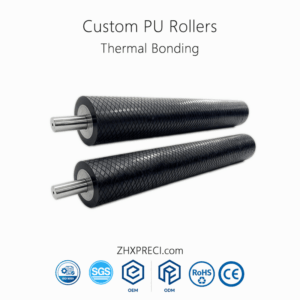
Custom Abrasion Resistant PU Rollers For Packaging Conveyors
Read more -
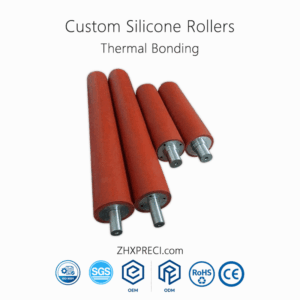
Custom Abrasion Resistant Silicone Coated Rollers Heavy Wear
Read more -
Custom Air Cooled Rubber Rollers with Internal Channels
Read more -
Custom Aluminum Core PU Rollers With Food Grade Compliance
Read more -
Custom Anti-Microbial Silicone Rollers Hygiene Grade
Read more -
Custom Anti-Static PU Rollers For Explosive Dust Environments
Read more -
Custom Anti-Static Silicone Coated Rollers Electronic Use
Read more -
Custom Antistatic PU Rollers For Electronics Conveying
Read more -
Custom API Grade Rubber Rollers for Drill Pipe Wiper
Read more -
Custom ATEX Compliant PU Rollers For Mining Conveyor
Read more -
Custom ATEX Compliant Rubber Rollers for Grain Handling
Read more -
Custom Bearing Mounted Silicone Coated Rollers Quick Change
Read more -
Custom Cantilever Mount Rubber Rollers for Narrow Spaces
Read more -
Custom Cantilever Mounted Silicone Rollers Easy Access
Read more -
Custom Cast Iron Core PU Rollers With Keyway Mounting
Read more
Overview of Custom Cleanroom Silicone Rubber Rollers
In controlled environments where particulate contamination must be strictly managed, the selection of roller components directly influences product yield and process stability. Custom cleanroom silicone rubber rollers are precision-engineered elastomer wheels designed for use in semiconductor fabrication, pharmaceutical packaging, medical device assembly, flat-panel display manufacturing, and battery electrode coating. These rollers combine the inherent cleanliness of high-purity silicone with tailored geometries, durometers, and surface finishes to meet specific nip pressure, traction, and chemical resistance requirements. As a China-based OEM/ODM factory manufacturer supplier, ZHXPRECI offers Custom Cleanroom Silicone Rubber Rollers engineered to support critical production lines where reliability and consistency are non‑negotiable.
What Are Cleanroom Silicone Rubber Rollers?
Cleanroom silicone rubber rollers are cylindrical elastomeric components manufactured from addition-cure or peroxide-cure liquid silicone rubber (LSR) or high-consistency rubber (HCR) that meet ISO Class 5 to Class 7 (Class 100 to Class 10,000) cleanliness standards. They are characterised by low outgassing, minimal extractable ions, and resistance to ozone and UV degradation. Unlike conventional rubber rollers, cleanroom‑grade silicone rollers are processed in dedicated clean manufacturing lines, packaged in double-sealed bags, and subjected to particle counting and surface residue tests. Their hardness typically ranges from 40 Shore A to 80 Shore A, with tolerance of ±3 Shore A, while operating temperatures span from –40 °C to +200 °C for continuous use, and up to 230 °C intermittently. These rollers serve in conveying, laminating, squeegee, coating, and cleaning applications where static dissipation or conductive properties can also be imparted through carbon‑black or metallic filler modifications.
Key Features and Technical Parameters
Custom cleanroom silicone rubber rollers from ZHXPRECI are defined by measurable attributes that directly affect process outcomes:
- Durometer (Shore A): Available from 30 to 90, with standard tolerance ±3. Softer rollers (30–50 A) provide higher conformability for fragile substrates; harder rollers (60–90 A) offer greater resistance to compression set and higher nip loads.
- Temperature resistance: Continuous service from –50 °C to +200 °C; peak excursions up to 230 °C for brief periods, depending on curing system.
- Tensile strength: Typically 6.0 to 9.5 MPa for high‑strength formulations; elongation at break ranges from 250 % to 600 %.
- Compression set: Values of 10 % to 25 % (after 22 h at 177 °C) indicate excellent rebound recovery, reducing the need for frequent adjustment.
- Surface roughness (Ra): As‑molded finishes of 0.4–0.8 µm, or ground/polished to 0.1–0.2 µm for ultra‑smooth contact.
- Particle shedding: LPC (liquid particle count) tested to < 100 particles ≥0.5 µm per cm², compatible with ISO 14644-1.
- Extractable silicones & ionic contaminants: Meeting or exceeding ASTM E595 outgassing criteria for vacuum applications.
These parameters are verified through in‑process and final inspection using Shore durometers, tensile testers, laser confocal microscopes, and FTIR spectroscopy. All data sheets are provided per batch, enabling engineers to validate specification conformance before installation.
How to Choose the Right Cleanroom Silicone Roller for Your Application?
Selecting an appropriate cleanroom silicone rubber roller requires a systematic evaluation of operational constraints. Consider the following factors:
- Substrate sensitivity: Fragile films or glass panels require lower nip pressures and softer rollers (40–55 A) with a smooth finish to avoid surface scratching.
- Chemical exposure: If solvents (isopropanol, acetone) or alkaline cleaners are present, specify peroxide‑cured silicone with increased crosslink density for better swelling resistance.
- Temperature cycling: Applications involving heat lamination or UV curing demand materials with low thermal expansion and stable hardness across the operating range.
- Static control: For electronics assembly, conductive or anti‑static silicone (surface resistivity 10³–10⁶ Ω/sq) can be formulated to dissipate electrostatic charges.
- Roller geometry: Core diameter, face length, and shaft interface (keyed, threaded, or smooth bore) must match existing machinery; custom moulds are available for non‑standard profiles.
At ZHXPRECI, our engineering team assists with material selection through comparative testing of durometer, thermal ageing, and chemical immersion data, ensuring that the chosen compound aligns with actual production conditions.
Common Applications in High‑Purity Industries
Custom cleanroom silicone rubber rollers are deployed in a variety of mission‑critical processes:
- Semiconductor wafer handling: Non‑contact edge gripping and backside support in spin‑coat, develop, and rinse stations.
- Lithium‑ion battery electrode coating: Squeegee rollers for uniform slurry application on copper/aluminium foils.
- Medical device assembly: Conveying and sealing of syringes, vials, and IV bags under ISO 13485 cleanroom conditions.
- Flexible printed circuit (FPC) lamination: Heat‑resistant rollers for adhesive activation without material degradation.
- Optical film extrusion: Anti‑stick silicone surfaces prevent film wrinkling and streak defects.
- Food & pharmaceutical packaging: FDA‑compliant silicone grades (21 CFR 177.2600) for direct or indirect food contact.
Each application benefits from the rollers' inertness, which minimises catalyst poisoning and particle generation, contributing to higher overall equipment effectiveness (OEE).
Manufacturing and Quality Assurance at ZHXPRECI
As an experienced China OEM/ODM factory manufacturer supplier, ZHXPRECI follows a structured production workflow: raw material inspection → compounding → injection/compression moulding → post‑curing → precision grinding (if required) → ultrasonic cleaning → particle counting → packaging in Class 100 cleanroom. Our quality system includes:
- Incoming material validation via rheometer and viscosity checks.
- In‑process hardness and dimension checks every 30 minutes.
- Final dimensional measurement with CMM or optical comparators to tolerance of ±0.05 mm on critical diameters.
- Dynamic balancing (grade G2.5 or better) for high‑speed applications (>500 rpm).
- Barcode traceability linking each roller to its production batch and test records.
We maintain ISO 9001 and IATF 16949 quality management systems, with cleanroom operations compliant to ISO 14644-1 Class 7. Our facility is equipped with 10‑ton injection presses and 8‑station compression presses, capable of handling roller diameters from 10 mm to 400 mm and lengths up to 2500 mm.
Customisation Options: Elastomer Wheels and Rollers
Beyond standard cylindrical shapes, ZHXPRECI offers custom elastomer wheels and rollers with various surface profiles: flat, crowned, concave, grooved, or spiral‑wound. Additional options include:
- Metal cores: Aluminium, stainless steel, or carbon steel, with or without hard‑anodised or electroless nickel plating for corrosion resistance.
- Bonding systems: Chemical primer + heat‑cured adhesive ensuring peel strength > 4 N/mm (tested per ASTM D429).
- Colour coding: Blue, white, or transparent silicone for easy visual identification of hardness or application zone.
- Special fillers: PTFE or graphite for reduced friction, or ceramic powders for enhanced wear resistance.
These customisations allow engineers to address unique speed, torque, and wear patterns without redesigning the entire conveyor or processing line.
Frequently Asked Questions (FAQ)
What is the typical service life of a cleanroom silicone rubber roller?
Service life depends on nip pressure, sliding speed, temperature, and cleaning frequency. Under moderate conditions (0.5 MPa nip, 50 m/min, ambient temperature), silicone rollers can operate for 12–24 months before experiencing surface glazing or hardness drift. Regular inspection of surface integrity and diameter reduction (≤0.2 mm) helps schedule replacement proactively.
How do I clean and maintain cleanroom silicone rollers?
Use isopropyl alcohol (70 % concentration) and lint‑free wipes for routine cleaning, avoiding abrasive tools that could damage the surface. For stubborn residues, mild detergent solutions (pH 6–8) followed by deionised water rinse are acceptable. Autoclaving (121 °C, 15 psi) is possible for medical‑grade rollers, but repeated cycles may reduce tensile strength – consult the material data sheet for specific limits.
Can silicone rollers be used in vacuum environments?
Yes, but only with low‑outgas formulations that have been post‑cured for 4 h at 200 °C to remove volatile fractions. Such rollers exhibit total mass loss (TML) < 1.0 % and collected volatile condensable materials (CVCM) < 0.1 % per ASTM E595, making them suitable for vacuum chambers up to 10⁻⁵ Torr.
Are these rollers compatible with UV curing processes?
Standard translucent silicone allows UV transmission (approx. 80 % at 365 nm) for through‑curing of adhesives. For opaque compounds, we can design rollers with UV‑transparent windows or utilise surface‑cure mechanisms. We recommend testing a sample under your specific UV intensity and wavelength before full‑scale deployment.
What is the minimum order quantity (MOQ) for custom rollers?
MOQ typically starts at 10 pieces for standard sizes and 50 pieces for custom moulded profiles, but this is subject to final specification, tooling availability, and production batch efficiency. For prototype validation, we offer single‑piece sampling with existing moulds.
How do you ensure batch‑to‑batch consistency?
We maintain strict raw material sourcing from approved suppliers, with each batch of compound tested for cure curve (MDR), specific gravity, and initial hardness. Process parameters (temperature, pressure, cycle time) are monitored via SCADA and adjusted using feedback loops. Statistical process control (SPC) charts track every critical characteristic, and we provide a certificate of conformance with each shipment.
Can I get a roller with a specific surface texture?
Yes. We can produce finishes from Ra 0.05 µm (mirror polished) to Ra 3.2 µm (matt anti‑slip) using diamond grinding, sanding, or plasma treatment. For embossing or pattern transfer, we can engrave custom textures onto the roller surface.
Do you offer conductive or ESD‑safe silicone rollers?
Yes. By incorporating conductive carbon black or metal‑coated particles, we adjust surface resistivity from 10³ to 10⁹ Ω/sq, meeting ANSI/ESD S20.20 requirements. These rollers are frequently used in PCB handling and hard disk drive assembly.
What documentation is provided with each order?
Every shipment includes a dimensional inspection report, hardness certificate, outgassing data (if applicable), and a cleanroom particle count record. For regulated industries, we can supply FDA declaration, REACH/ RoHS compliance statements, and full material disclosure upon request.
Lead Time and Ordering Process
Production lead time for Custom Cleanroom Silicone Rubber Rollers is subject to order quantity, current production schedule, and final specification confirmation. We recommend initiating the procurement process with a technical discussion to define hardness, dimensions, surface finish, and any certifications required. After receiving a formal purchase order and approved engineering drawing, we provide a confirmed delivery window based on real‑time shop‑floor capacity. For urgent prototype needs, we maintain a fast‑track sampling service that can produce a limited number of rollers within a compressed timeline – however, this also depends on material availability and tooling readiness at the time of request.
Why Partner with ZHXPRECI as Your OEM/ODM Supplier?
ZHXPRECI has accumulated over 15 years of experience in custom elastomer moulding, with a dedicated cleanroom division focused exclusively on silicone rollers for sensitive environments. Our advantages include:
- In‑house tooling design and manufacturing, reducing iteration cycles for custom profiles.
- 100 % final inspection by automated vision systems to verify diameter, roundness, and surface defects.
- Flexible packaging options: vacuum‑sealed antistatic bags, rigid tubes, or crates with individual separators.
- Technical support from application engineers who understand semiconductor, pharmaceutical, and battery production workflows.
We view every roller as a functional component that directly impacts your line efficiency, and we approach each project with a problem‑solving mindset, backed by documented material science and empirical test data. As a China OEM/ODM factory manufacturer supplier, we offer competitive cost structures without compromising on process control or traceability.
Conclusion
Selecting the correct custom cleanroom silicone rubber roller requires a balance of material properties, geometry, and operational parameters. By focusing on measurable attributes – durometer, temperature range, surface finish, and chemical compatibility – procurement and engineering teams can make informed decisions that reduce downtime and reject rates. ZHXPRECI provides end‑to‑end customisation, from compound formulation to final cleanroom packaging, supported by transparent quality records and responsive technical dialogue. For your next cleanroom roller requirement, we invite you to evaluate our capabilities against your precise performance criteria.