
Custom Solid Silicone Rubber Rollers
Custom Solid Silicone Rollers
Custom silicone rollers for high-temp non-stick processes.
- 30-90A hardness
- -60~230°C temp
- 60-300mm dia
- ISO 9001/FDA cert
- Up to 500kg load
Showing 1–16 of 106 results
-
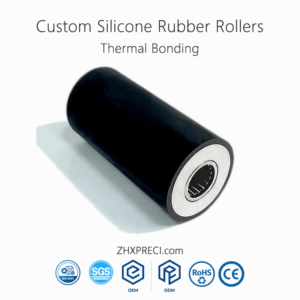
Black PU Rubber Coated Wheel Roller Industrial Grade for Automation Machinery Conveyor Transport and Factory Use
Read more -
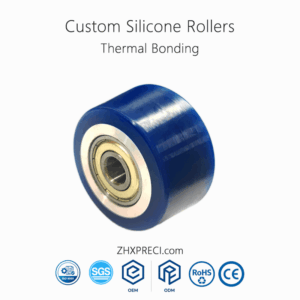
Blue Customized Silicone Rubber Coated Roller & High Quality Drive Guide Roller
Read more -
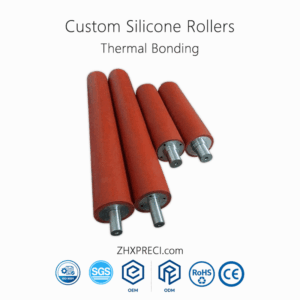
Custom Abrasion Resistant Silicone Coated Rollers Heavy Wear
Read more -
Custom Air Cooled Rubber Rollers with Internal Channels
Read more -
Custom Anti-Microbial Silicone Rollers Hygiene Grade
Read more -
Custom Anti-Static Silicone Coated Rollers Electronic Use
Read more -
Custom API Grade Rubber Rollers for Drill Pipe Wiper
Read more -
Custom ATEX Compliant Rubber Rollers for Grain Handling
Read more -
Custom ATEX Compliant Silicone Wheels Hazardous Area
Read more -
Custom Bearing Mounted Silicone Coated Rollers Quick Change
Read more -
Custom Bracket Mount Silicone Wheels Easy Installation
Read more -
Custom Cantilever Mount Rubber Rollers for Narrow Spaces
Read more -
Custom Cantilever Mounted Silicone Rollers Easy Access
Read more -
Custom CE Certified Silicone Rollers European Market
Read more -
Custom Chemical Resistant Silicone Coated Rollers Process Use
Read more -
Custom Cleanroom Compatible Silicone Rollers Particle Free
Read more
What Are Custom Solid Silicone Rubber Rollers?
Custom solid silicone rubber rollers are precision-engineered industrial components consisting of a metallic core—typically steel or aluminum—bonded with a homogeneous, void-free silicone rubber covering. Unlike sponge or foam rollers that contain cellular structures, solid silicone rubber rollers offer a continuous, dense elastomeric surface. This construction provides consistent load-bearing capacity, predictable compression behavior, and uniform pressure distribution across the full contact width.
The defining characteristic of solid silicone rubber rollers lies in their ability to maintain physical properties across an exceptionally wide temperature spectrum. Standard silicone compounds remain functional from approximately -60°C to 230°C, with specialized high-temperature formulations extending performance up to 250°C or higher. This thermal stability, combined with the material's inherent release properties and resistance to ozone, UV radiation, and weathering, makes solid silicone rollers suitable for demanding continuous-process industries including printing, laminating, packaging, textile finishing, and film conversion.
As a China-based OEM/ODM factory manufacturer supplier, ZHXPRECI specializes in custom elastomer wheels and rollers engineered to meet specific application requirements. Custom Solid Silicone Rubber Rollers from ZHXPRECI | China OEM/ODM Factory Manufacturer Supplier Custom Elastomer Wheels & Rollers are manufactured with attention to dimensional precision, bond integrity, and surface finish characteristics tailored to each customer's process conditions.
Key Technical Characteristics of Solid Silicone Rubber Rollers
Hardness Range and Selection Criteria
The hardness of solid silicone rubber rollers is typically specified on the Shore A scale. Standard formulations are available across a range of approximately 30 to 90 Shore A, with common off-the-shelf grades at 40, 50, 60, 70, and 80 Shore A. Softer compounds (30–50 Shore A) provide greater conformability and are often selected for applications requiring intimate contact with irregular substrates or delicate surface materials. Medium-hardness grades (60–70 Shore A) offer a balanced combination of resilience and load resistance, making them suitable for general-purpose printing, laminating, and converting operations. Harder formulations (80–90 Shore A) deliver increased wear resistance and dimensional stability under higher nip pressures.
Hardness selection directly influences roller performance in terms of nip width, pressure distribution, and substrate contact characteristics. Engineers should evaluate the specific requirements of their process—including substrate type, operating temperature, line speed, and nip load—when specifying durometer.
Temperature Resistance and Thermal Stability
Silicone rubber exhibits remarkable thermal stability owing to its siloxane (Si-O) backbone structure. Standard solid silicone rollers maintain elasticity and mechanical integrity across a broad operating range. Industry data indicates functional performance from approximately -60°C to 230°C for general-purpose compounds, with specialized high-temperature formulations capable of sustained operation at 250°C. Short-term exposure to temperatures up to 350°C is possible with certain premium grades.
This thermal resilience makes solid silicone rollers suitable for heat-sealing equipment, hot-melt adhesive applications, thermal laminating processes, and drying oven environments where other elastomers would degrade or lose dimensional stability. The material's low thermal conductivity (approximately 0.18–0.28 W/m·K) also contributes to stable thermal performance during temperature cycling.
Release Properties and Non-Stick Surface
Solid silicone rubber possesses inherently low surface energy, typically in the range of 21–23 dynes/cm. This characteristic provides excellent release properties, preventing adhesion of tacky materials such as adhesives, inks, coatings, and films. The non-stick surface reduces material build-up, minimizes cleaning frequency, and contributes to consistent process performance over extended production runs. For applications involving pressure-sensitive adhesives, hot-melt coatings, or sticky substrates, the release properties of solid silicone rollers offer distinct operational advantages.
Compression Set Resistance and Elastic Recovery
Solid silicone rubber demonstrates favorable compression set resistance compared to many other elastomers. Under sustained deflection at elevated temperatures, quality silicone compounds maintain compression set values below 4% after extended exposure. This property ensures that rollers return to their original shape after periods of static loading, reducing the risk of flat-spotting and maintaining consistent nip geometry throughout the service life. The material's resilience also contributes to vibration damping and smooth machine operation.
Chemical and Environmental Resistance
Silicone rubber exhibits strong chemical inertness and resistance to a wide range of substances. The material demonstrates negligible swelling when exposed to many ketones, esters, glycol ethers, and aromatic hydrocarbons commonly encountered in coating and printing environments. Additionally, silicone rollers resist degradation from ozone, UV radiation, and oxygen, maintaining physical properties even after prolonged outdoor exposure. For food-contact applications, specific silicone formulations comply with FDA 21 CFR 177.2600 and similar international food-grade standards.
What Is the Difference Between Solid and Sponge Silicone Rollers?
Solid silicone rubber rollers and sponge (foam) silicone rollers serve distinctly different applications based on their structural differences. Solid rollers contain no internal voids or cellular structures, providing a dense, continuous elastomeric surface. This construction offers greater mechanical strength, higher load capacity, and superior resistance to compressive forces. Solid rollers are better suited for applications involving significant nip pressures, high torque transmission, or where precise dimensional stability is required.
Sponge silicone rollers, by contrast, incorporate a cellular structure that reduces overall weight and provides greater conformability to uneven surfaces. However, sponge rollers generally offer lower load-bearing capacity and may not match the extreme temperature tolerance or compression set resistance of solid silicone grades. For B2B procurement decisions, the choice between solid and sponge construction should be guided by the specific demands of the application—including pressure requirements, substrate characteristics, and environmental conditions.
How to Select the Right Solid Silicone Rubber Roller for Your Application
Selecting an appropriate solid silicone rubber roller requires systematic evaluation of several interdependent factors:
- Operating temperature range — Determine both continuous and peak temperatures the roller will encounter. Standard silicone compounds suit most applications from -60°C to 230°C; high-temperature grades extend this upper limit.
- Nip pressure and load requirements — Higher nip pressures generally necessitate harder durometer compounds (70–90 Shore A) to maintain dimensional stability and prevent excessive deformation.
- Substrate characteristics — Delicate or irregular substrates may benefit from softer compounds (30–50 Shore A) that conform without damaging the material surface.
- Chemical exposure — Evaluate the specific solvents, inks, coatings, or cleaning agents the roller will contact. Silicone offers broad chemical resistance, but compatibility should be verified for unusual or aggressive chemistries.
- Dimensional requirements — Specify outside diameter, face length, core diameter, and mounting configuration. Custom Solid Silicone Rubber Rollers from ZHXPRECI | China OEM/ODM Factory Manufacturer Supplier Custom Elastomer Wheels & Rollers can be manufactured to customer-provided drawings with dimensional tolerances appropriate to the application.
- Surface finish — Surface roughness (Ra) can be controlled through precision grinding, typically achieving values from 0.3 to 1.2 μm. Smoother finishes suit release applications; textured surfaces may be specified where increased grip is required.
- Regulatory compliance — For food, pharmaceutical, or medical applications, specify FDA-compliant or other relevant certified compounds.
What Are the Primary Applications of Solid Silicone Rubber Rollers?
Solid silicone rubber rollers are deployed across a diverse range of industrial sectors, each leveraging the material's unique combination of thermal stability, release properties, and chemical resistance:
- Printing and converting — Used as nip rollers, applicator rollers, and guide rollers in printing presses, laminators, and coating lines. Silicone's release properties prevent ink and adhesive build-up, while temperature resistance supports high-speed, high-temperature printing processes.
- Packaging — Essential in heat-sealing machines, pouch-forming equipment, and edge-banding operations. Silicone rollers apply consistent heat and pressure to create strong seals without sticking to packaging films.
- Laminating and film processing — Widely employed in roll-to-roll laminators, film extrusion lines, and plastic film conversion. The rollers ensure uniform pressure distribution, bubble-free lamination, and consistent web handling.
- Textile finishing — Used in fabric coating, heat-setting, and calendering operations where temperature resistance and non-stick properties are critical.
- Food and pharmaceutical processing — FDA-compliant silicone rollers are employed in food packaging lines, tablet coating systems, and other hygienic applications.
- Electronics manufacturing — Utilized for conformal coating application on printed circuit boards and optical film manufacturing, where coating uniformity and chemical resistance are essential.
How to Maintain and Extend the Service Life of Solid Silicone Rubber Rollers
Proper maintenance practices significantly influence the operational lifespan of solid silicone rubber rollers. Industry experience indicates that quality silicone rollers in normal commercial use (approximately eight hours per day with appropriate cleaning and pressure control) typically provide three to five years of service. With premium materials and diligent maintenance, service life may extend beyond five years.
Recommended maintenance practices include:
- Regular cleaning — Clean roller surfaces after each work shift or production run to remove adhesive residue, ink deposits, and particulate contamination. Use a soft, lint-free cloth with mild detergent or a recommended silicone-safe solvent. Isopropyl alcohol is commonly used for cleaning silicone rollers.
- Avoid aggressive solvents — Do not use harsh solvents, metal scrapers, or abrasive materials that may damage the silicone surface. Always verify cleaner compatibility with the specific silicone compound before use.
- Relieve pressure during idle periods — When the machine is not in operation, lift or separate rollers to prevent prolonged compression at a single point. Extended static loading can contribute to compression set and flat-spotting.
- Inspect regularly — Periodically examine rollers for signs of wear including surface cracking, hardening, loss of elasticity, or uneven pressure patterns. Address any issues promptly to prevent degradation of process quality.
- Monitor operating conditions — Avoid exceeding the recommended temperature and pressure limits for the specific silicone formulation. Excessive heat or pressure accelerates material aging and reduces service life.
What Lead Time Should Be Expected for Custom Solid Silicone Rubber Rollers?
Delivery schedules for custom-manufactured solid silicone rubber rollers depend on multiple variables including order quantity, current production schedule, and final specification confirmation. Customers are encouraged to discuss their specific requirements with the manufacturer to establish a realistic timeline that accommodates both production planning and quality assurance processes. Custom Solid Silicone Rubber Rollers from ZHXPRECI | China OEM/ODM Factory Manufacturer Supplier Custom Elastomer Wheels & Rollers are produced with attention to dimensional accuracy and material integrity, and lead times are determined on a case-by-case basis following specification finalization.
What Quality Standards and Tolerances Apply to Solid Silicone Rubber Rollers?
Quality solid silicone rubber rollers are manufactured to recognized industrial standards with defined tolerances for critical dimensions and performance characteristics. Typical specifications include:
- Dimensional tolerances — Diameter tolerances of approximately ±0.5 mm are achievable for many custom configurations. More precise tolerances may be specified for demanding applications.
- Radial runout — High-precision rollers achieve radial runout below 0.05 mm Total Indicator Reading (TIR), with premium grades reaching 0.02 mm or better.
- Coating thickness consistency — Advanced manufacturing processes maintain coating thickness within ±0.075 mm across the working face.
- Dynamic balancing — Rollers intended for high-speed operation may be dynamically balanced to ISO 1940 G6.3 or equivalent standards.
- Bond integrity — Quality silicone-to-metal bonds achieve adhesion strength exceeding 5.5 kN/m, ensuring reliable performance under operational loads.
- Hardness tolerance — Typical hardness tolerance is ±3 Shore A for standard production, with tighter control available for specialized applications.
Compliance with standards such as ISO 9001:2015, FDA 21 CFR 177.2600 for food contact, and 3-A Sanitary standards may be specified depending on the application requirements.
What Are the Limitations of Solid Silicone Rubber Rollers?
While solid silicone rubber rollers offer exceptional performance in many applications, engineers should be aware of certain limitations. Silicone rubber generally exhibits lower tensile strength and tear resistance compared to natural rubber or other synthetic elastomers. The material is susceptible to damage from sharp edges or abrasive contact and may not be suitable for applications involving heavy mechanical abrasion. Additionally, silicone rollers are typically more expensive than alternatives such as NBR or EPDM rollers. For applications requiring oil resistance, silicone is not the preferred choice. These factors should be weighed against the performance benefits when selecting roller materials for specific processes.
Frequently Asked Questions About Solid Silicone Rubber Rollers
What is the typical Shore A hardness range for solid silicone rubber rollers?
Solid silicone rubber rollers are commonly available from approximately 30 to 90 Shore A, with standard grades at 40, 50, 60, 70, and 80 Shore A. Custom formulations can be developed for specific hardness requirements outside this range.
What temperature range can solid silicone rubber rollers withstand?
Standard silicone compounds typically operate from approximately -60°C to 230°C, with specialized high-temperature grades extending to 250°C or higher. Some premium formulations tolerate brief exposure to temperatures up to 350°C.
Are solid silicone rubber rollers FDA-compliant for food contact?
Yes, specific silicone formulations are available that comply with FDA 21 CFR 177.2600 for indirect food contact. Customers should specify FDA-grade material when ordering for food, beverage, or pharmaceutical applications.
How do solid silicone rollers compare to EPDM or NBR rollers?
Silicone rollers offer superior temperature resistance and release properties compared to EPDM or NBR, making them preferred for high-temperature applications and processes involving sticky or adhesive materials. However, silicone generally provides lower tensile strength and abrasion resistance, and is more expensive. EPDM and NBR may be more cost-effective for applications not requiring extreme temperature performance or non-stick characteristics.
Can solid silicone rubber rollers be manufactured to custom dimensions?
Solid silicone rubber rollers are routinely manufactured to custom dimensions including outside diameter, face length, core specifications, and mounting configurations. Custom Solid Silicone Rubber Rollers from ZHXPRECI | China OEM/ODM Factory Manufacturer Supplier Custom Elastomer Wheels & Rollers can be produced to customer drawings and specifications.
What surface finishes are available for solid silicone rubber rollers?
Surface finishes can be controlled through precision grinding, typically achieving roughness values (Ra) from 0.3 to 1.2 μm. Options include smooth, matte, and textured finishes depending on the application requirements.
How should solid silicone rubber rollers be stored when not in use?
Rollers should be stored in a cool, dry environment away from direct sunlight, ozone-generating equipment, and solvents. Rollers should be supported evenly along their length to prevent sagging or distortion, and pressure should be relieved from nip points.
What causes premature failure of solid silicone rubber rollers?
Common causes of premature failure include operation above recommended temperature limits, excessive nip pressure, exposure to incompatible chemicals or solvents, abrasive contact with sharp edges, inadequate cleaning leading to material build-up, and extended static loading causing compression set.
For detailed technical consultation, specification development, or to discuss your specific application requirements, please contact our engineering team. Custom Solid Silicone Rubber Rollers from ZHXPRECI | China OEM/ODM Factory Manufacturer Supplier Custom Elastomer Wheels & Rollers are engineered to meet the performance demands of your production environment.