


Description
Custom Chemical Resistant Polyurethane Wheels for Etching Lines
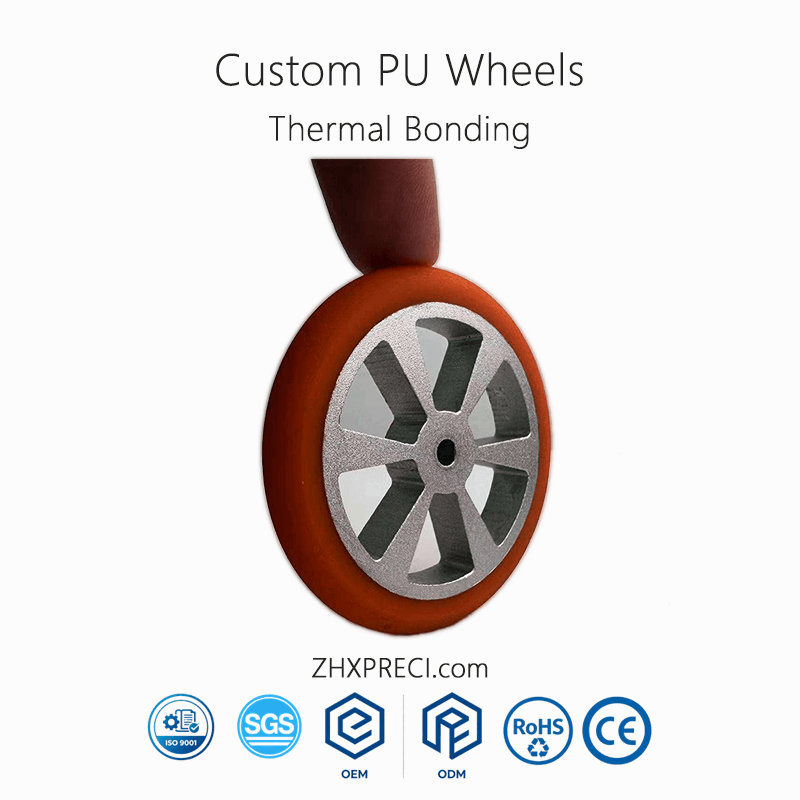
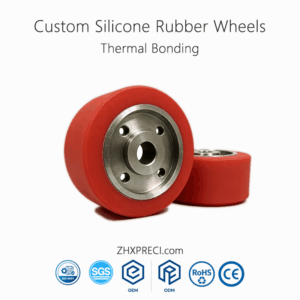
Our custom chemical resistant polyurethane wheels for etching lines are produced to order in our own factory in China, with the compound, hardness, core material and dimensions matched to the actual chemistry running on your line. As a professional China manufacturer and OEM/ODM supplier, we review your bath chemistry before quoting and supply a series of technical checks with every batch — formulation record, dimensional inspection and load data that we can share on request. A properly formulated chemical resistant polyurethane resists acid, alkali and etching solutions without swelling, cracking or de-bonding from the core, so the wheel keeps its diameter and running surface instead of turning into a maintenance item after a few months. For PCB etching lines, chemical milling benches, plating and pickling equipment, that translates into fewer unplanned stoppages, less risk of contaminating the process bath and a noticeably lower cost per operating hour. Whether you need a handful of replacement wheels or a wholesale volume run under your own OEM part number, our technical team gives you straight advice on hardness, core design and pricing before you place the order.
Why Choose Our Chemical Resistant Polyurethane Wheels for Etching Lines
Compound matched to your chemistry. We review the SDS and operating concentration of your etching or plating bath and select a polyurethane system that holds up in that specific environment, rather than selling one universal grade for every wet process.
Strong core-to-polyurethane bond. A chemically bonded and post-machined interface keeps the tread locked to the hub, which is the failure point on most cheap imported wheels used in wet chemical service.
Custom dimensions and hardness. Diameters, tread widths, bores, keyways, crowned or grooved profiles and Shore A hardness are all made to your drawing, so the wheel drops into your existing bracket without adapters.
Precision machining. Finished faces are machined to tight tolerance and checked for dynamic runout, which reduces vibration and helps keep web tension and tracking stable on continuous etching lines.
Batch consistency. Documented formulations and in-process hardness checks mean the wheel you receive next quarter behaves like the one running now, which matters for scheduled maintenance planning.
Direct factory pricing. You buy from the manufacturer, not through a trading layer, so customization, samples and volume pricing are handled by the same technical team that makes the product.
Technical Specifications – Chemical Resistant Polyurethane Wheels for Etching Lines
The table below shows our standard capability for custom chemical resistant polyurethane wheels and rollers for etching lines. As a China OEM/ODM manufacturer, we support customized outer diameters, tread widths, bores and core materials to match your drawing or worn original.
| Parameter | Specification |
|---|---|
| Product type | Custom chemical resistant polyurethane wheel / roller for etching lines and wet chemical processing equipment |
| Applications | PCB etching and developing lines, chemical milling, spray etching, plating and anodizing lines, acid pickling, wet benches |
| Outer diameter | 50 mm to 500 mm, made to drawing |
| Tread width | 20 mm to 300 mm, made to drawing |
| Bore / shaft mounting | 10 mm to 80 mm bore, keyway, threaded insert, bearing seat or custom hub design |
| Polyurethane hardness | Shore A 70 to 95 standard; Shore D grades available on request |
| Core material | Carbon steel, stainless steel 304 / 316, aluminium alloy or engineering plastic |
| Surface finish | As-cast, precision ground, grooved, crowned or knurled patterns |
| Colour | Natural amber standard; custom colour and compound marking available |
| Operating temperature | Typically -20°C to +80°C; higher temperature compounds on request |
| Tolerance | Typically ±0.1 mm on critical dimensions, confirmed per drawing |
| OEM / ODM | Supported, including your logo, packaging, part numbering and private label |
| Minimum order quantity | Flexible, from trial quantity to wholesale volume; please contact us with your requirement |
Suitable for PCB etching and developing lines, chemical milling, spray etching, plating and anodizing lines, acid pickling, and wet benches. Custom polyurethane compound selection and wholesale pricing are available — contact us for sample support and expert advice.
Details Images – Construction & Application


Product Details and Build Options
Because every etching line is different, we build these wheels against your drawing, a sample you send us, or a reverse-engineered part you can no longer source from the original equipment maker. Typical build options include crowned or flat tread profiles, grooved and knurled patterns for grip on wet surfaces, stainless or aluminium hubs for non-magnetic or low-weight requirements, and drilled or tapped hubs for direct shaft mounting.
If you are unsure which compound suits your bath, send us the chemistry details and we will come back with our professional recommendation and a sample plan. We can also produce matched sets so that wheels running in the same section wear at the same rate, which keeps the line level and simplifies your spare parts planning.
Material Properties and What They Mean on the Line
| Property | Typical Value | What It Means on the Line |
|---|---|---|
| Hardness | Shore A 70 – 95 | Harder grades resist abrasion and cut-through; softer grades grip wet, slippery surfaces better. We recommend the value based on your line speed and load. |
| Compression set | Low | Helps the wheel stay round under continuous load, which keeps tracking and web alignment stable over long runs. |
| Tear strength | High | Reduces edge chipping and chunking when wheels run against bath walls or guides. |
| Abrasion resistance | Better than standard rubber and general-purpose PU | Longer service intervals between wheel changes, fewer line stoppages for replacement. |
| Hydrolysis resistance | Compound dependent | Polyether-based systems are selected for hot, wet and alkaline service, where ester-based PU would soften and fail early. |
| Chemical resistance | Formulated against your bath chemistry | Prevents swelling and surface breakdown that change the wheel diameter and contaminate the process bath. |
| Core-to-PU bond | Chemically bonded, then machined | Prevents tread separation, the most common failure mode of low-cost chemical service wheels. |
| Dynamic runout | Typically within 0.10 mm on finished faces | Lower vibration and steadier transport of thin substrates through the etching section. |
Chemical resistance is only part of the picture. The values above describe how our etching-line polyurethane behaves in service, so you can compare it against the rubber or generic PU wheels you may be using today. Values shown are typical for our standard compounds and are confirmed in writing for your specific order. Custom hardness from Shore A 70 to 95 and Shore D grades are available from our factory.
About Us – China OEM/ODM Manufacturer of Chemical Resistant Polyurethane Wheels
About Us

Customers Visiting

As a China-based manufacturer and OEM/ODM supplier of custom polyurethane wheels and rollers for industrial wet processes, ZHXPRECI has more than a decade of experience serving PCB equipment builders, plating line integrators and chemical processing plants worldwide. Our team works directly with technical buyers, so questions about compound selection, core design, tolerances and delivery go to the people who actually make the parts — not to a middle layer. Our market covers Europe, North America, Southeast Asia and the Middle East, and we regularly ship both single replacement sets and wholesale volume orders under customer OEM branding.
Factory and Equipment


Our Certifications (ISO9001, RoHS, Testing Reports)

Quality Control and Certifications
Casting, curing, machining and inspection all take place in our own facility, which lets us control the steps that decide whether a polyurethane wheel survives a chemical environment. Our equipment includes polyurethane casting and metering units, curing ovens with controlled temperature profiles, CNC lathes for turning bores and tread profiles, and finishing stations for grooving and crowning.
Each order is produced under a documented quality plan covering incoming raw material, formulation records, in-process hardness and dimensional checks, and final inspection before packing. Material certificates and batch records can be supplied with your shipment, and third-party inspection by a nominated agency can be arranged on request. Our factory operates a quality management system aligned with ISO 9001 practice, and we welcome customer audits. Our experience with etching and plating equipment builders has given us a clear understanding of which wheel failures actually matter on a running line, and we design and test accordingly.
Customer Visits and Sample Approval
We regularly host customers who want to review samples, approve compound hardness or inspect production before releasing a volume order. If you are evaluating a new supplier for chemical resistant polyurethane wheels, we suggest starting with a trial order or sample set, running it on your line, and then moving to scheduled production once the performance is confirmed.
Production and Inventory Policy
Lead time: Actual lead times depend on raw material supply, machining capacity and peak-season loading, so they can vary. Once your order is confirmed we will give you the most accurate delivery estimate we can and keep you informed throughout production.
Stock status: We generally do not hold stock for custom items, although a limited number of fast-moving standard sizes are kept on hand. That stock moves with sales and production, so please contact us before ordering to confirm live availability.
Bulk and urgent orders: For large volumes or tight deadlines, please talk to us early so we can review capacity and scheduling with you. We will do our best to fit your timetable.
Frequently Asked Questions – Chemical Resistant Polyurethane Wheels for Etching Lines
1. How do I know whether your polyurethane will survive my etching chemistry?
Send us the chemistry details or SDS of your bath, including concentration and operating temperature, and we will recommend a compound and, if needed, run an immersion test on a sample coupon before production. Where the application is critical, we suggest a small trial set so you can confirm performance on your own line before committing to volume. This is the same process we use with PCB and plating equipment builders, and it is the reason our chemical resistant polyurethane wheels for etching lines are specified by application rather than sold as a universal part.
2. Can you produce wheels that match the dimensions of the ones we currently use?
Yes. Send a drawing, a sample, or even a worn original, and we will reverse-engineer the part and confirm the bore, tread profile, hardness and tolerance before quoting. Custom and OEM production is our normal workflow, so your part number, packaging and labelling can be produced to your specification.
3. Which hardness should I choose for a wet etching line?
It depends on load, line speed and the surface the wheel runs against. Harder grades hold their shape and resist abrasion, while softer grades give better grip on wet, slippery surfaces. Tell us your operating conditions and we will recommend a starting hardness, then adjust it after the trial if needed.
4. What is your minimum order quantity, and how is pricing structured?
We keep MOQ flexible so customers can start with a trial quantity and move to wholesale volume once the part is approved. Pricing reflects diameter, compound, core material, tooling and quantity, so the fastest way to get a competitive price is to send your drawing and expected annual usage. For repeat programs we can also discuss scheduled deliveries to reduce your stockholding.
5. What are your delivery times for custom polyurethane wheels?
Standard custom parts are typically produced within a few weeks after drawing approval and deposit, but the actual lead time depends on raw material supply, workshop loading and the season. We confirm a realistic schedule with your order and keep you updated if anything changes.
6. Do you provide samples?
Sample and trial sets are available so you can test hardness, fit and chemical resistance in your own process. In many cases we can supply a sample close to your drawing from an existing mould, or produce a dedicated sample where the geometry is new. Please contact us with your requirement and we will advise the most practical option.
7. How do you pack and ship these wheels?
Wheels are packed individually or in matched sets with protective wrapping, then boxed and palletised for export. We can ship by express, air or sea depending on your timeline and volume, and we will confirm the packing method and shipping terms with you before dispatch.
8. What happens if a wheel fails early in service?
Contact us with photos and the operating details, and we will review the failure together with our production records. If the problem traces back to our material or workmanship, we will replace the affected parts or credit them. Most early failures in chemical service come from a compound mismatch, so resolving that with us usually means the replacement set performs as expected.
Get a Quote or Technical Advice
Looking for a reliable manufacturing partner for chemical resistant polyurethane wheels?
Send us your drawing, bath chemistry and operating conditions, and we will come back with a clear quote, hardness and compound advice, sample options for trial orders, and volume pricing. We support your project from material selection through to delivery.
Reviews
There are no reviews yet.