


Description
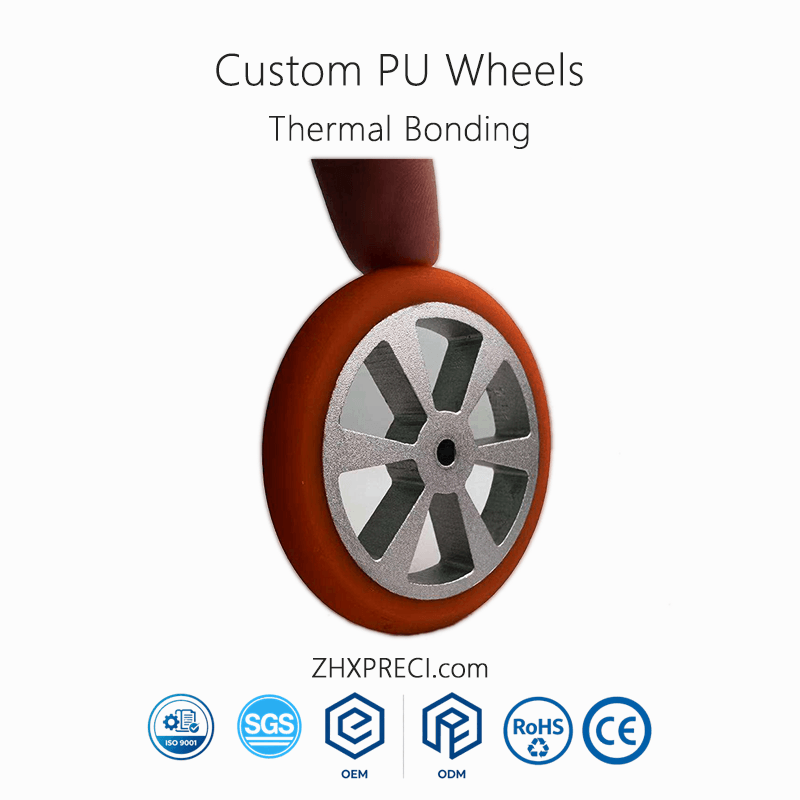
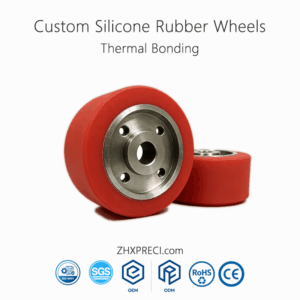
Custom Plastic Hub Polyurethane Wheels for Etching Carts
These custom plastic hub polyurethane wheels are built specifically for etching carts running through PCB wet-process lines, chemical etching benches and plating transfer trolleys. A lightweight moulded plastic hub is paired with a cast polyurethane tyre, so the cart stays easy to push while the wheel shrugs off acid mist, plating splash and constant wet-dry cycling far better than standard rubber, which tends to swell and crumble in the same conditions. Compared with solid rubber or cast iron wheels, these units roll noticeably quieter, leave no marks on coated and epoxy floors, and keep their roundness much longer under repeated loads, which means fewer changeovers and less downtime on your line. As a China-based manufacturer and supplier with our own moulding, casting and CNC machining workshop, we serve OEM and ODM projects directly, from single prototype sets through to wholesale volume, and our engineers are always glad to offer professional advice and a price suggestion on hub material, hardness grade and bore size for your particular etching line and floor conditions.
Why Choose These Polyurethane Wheels for Etching Carts
- Moulded plastic hub, light but dimensionally stable. PP, PA6, POM and ABS hubs are cast and finished in-house, so the wheel stays light enough for operators to handle all shift long while still carrying etching frames without flexing or cracking.
- Polyurethane tread tuned to your process. Shore A 70 to 95 covers everything from smooth push-assist carts to heavier transfer trolleys, giving you the grip, low rolling resistance and non-marking finish your wet-area floors need.
- Built for chemical and humid environments. Cast polyurethane resists dilute acids, alkalis and typical plating bath splash far better than standard rubber, so wheels stay serviceable instead of swelling or crumbling after a few months of production.
- Custom and OEM/ODM friendly. Because we control mould making, casting and machining, we can tailor diameter, tread profile, bore, bearing type, hardness and colour, and produce under your own brand.
- Stable quality, batch after batch. Every run passes hardness, dimensional and rolling checks before packing, so repeat orders match the sample you approved. Material certificates and third-party inspection reports can be arranged on request.
- Competitive wholesale pricing. Direct factory supply removes the middlemen, which is why customers running these wheels on etching carts and similar wet-process equipment keep coming back for volume orders.
Specifications
The table below shows our standard ranges for custom plastic hub polyurethane wheels. Anything outside these figures can usually be produced as a customized solution once our engineers confirm feasibility, so please send your drawing, load data or the dimensions of your current wheel along with a note on your floor condition.
| Parameter | Standard Range | Customization Options |
|---|---|---|
| Wheel diameter | 50 mm to 200 mm | Up to 250 mm on request |
| Tread width | 20 mm to 50 mm | Matched to cart load and floor gap |
| Hub material | PP, PA6, POM, ABS | Glass-filled PA6, anti-static or conductive grades |
| Polyurethane hardness | Shore A 70 to 95 | Hardness tuned to line speed and load |
| Bore and bearing | Plain bore 8 mm to 30 mm | Precision bearing, stainless bearing, threaded stem |
| Load capacity | 30 kg to 300 kg per wheel | Higher loads through wider tread or larger hub |
| Working temperature | -20 °C to +80 °C | High-temperature PU grade up to +100 °C |
| Tread finish | Smooth, non-marking | Crowned, flat or grooved profile |
| Colour | Natural amber, black | Custom colour to your colour code |
| Packing | Carton, then pallet | Individual bagging, labelled or branded cartons |
| Minimum order | 100 pcs per size | Lower quantity for trial and sample orders |
Material Properties
Typical values measured on cast polyurethane treads bonded to moulded plastic hubs in our standard production. The figures shift with hardness grade, tread thickness and hub design, so treat them as a selection guide rather than a fixed specification for every wheel.
| Property | Typical Value | What It Means on an Etching Cart |
|---|---|---|
| Hardness | Shore A 70 to 95 | Softer grades grip wet floors; harder grades roll easier under heavy frames |
| Tensile strength | 35 to 50 MPa | Resists tearing when carts roll over drain covers and floor joints |
| Tear resistance | 60 to 90 kN/m | Reduces chunking at the tread edge on rough concrete |
| Abrasion loss | Below 60 mm³ | Measured on our own samples; slower wear means fewer wheel changes |
| Compression set | Below 25% after 22 h at 70 °C | Wheels keep their roundness during long static storage of loaded carts |
| Chemical resistance | Good against dilute acids, alkalis and plating splash | Suitable for wet benches; not recommended for concentrated solvents |
| Water and hydrolysis resistance | Good | Stable performance in continuously damp etching areas |
| Service temperature | -20 °C to +80 °C | High-temperature grade available up to +100 °C for drying zones |
Details and Customization Options
Every etching cart line has its own floor, load pattern and cleaning routine, so we build these wheels around your application rather than forcing a stock size onto it. The hub can be moulded with a raised shoulder or flange to suit your existing axle bracket, and the polyurethane tread can be cast directly onto the hub or supplied as a replaceable tyre for higher-maintenance stations.
Bearing choice matters just as much. Plain bores work well where carts are washed down frequently, sealed precision bearings suit higher-speed transfer trolleys, and stainless bearings are the usual choice for permanently humid plating rooms. Tread profile, colour, bore tolerance and branding can all be agreed before production, and we can supply dimensional drawings and sample wheels for your own assembly trials.


About Us
We are a China-based manufacturer and supplier of custom plastic hub polyurethane wheels, rollers and casters for industrial carts, transfer trolleys and material handling equipment. Our team has spent years producing moulded hubs and cast polyurethane parts for customers in PCB and metal etching, plating, food processing, logistics and general factory automation.
We work as a direct factory rather than a trading company, which means you deal with the people who actually make the wheels. That keeps communication short and pricing competitive, and it lets us take on customized work that a catalogue supplier would refuse. Our engineers review your drawing, load requirement and working environment, then suggest a hub material, hardness grade and bearing combination that suits the job before you commit to a volume order. Small trial batches are welcome, so you can test the wheels on your own etching carts first.


Factory and Equipment
Our production floor covers mould making, hub moulding, polyurethane casting, curing, CNC machining, assembly and inspection. Key equipment includes injection and moulding presses for plastic hubs, casting lines with controlled oven curing, CNC lathes for bore and face machining, and a finishing area for tread profiling.
- Mould and tooling shop for new hub designs and prototype wheels
- Polyurethane casting and oven curing for consistent hardness across batches
- CNC machining for bore tolerance, concentricity and tread profile
- Hardness testers, dimensional gauges and rolling tests on every production run
- Load testing rig for verifying capacity before a batch is released
Because these processes sit under one roof, we can move quickly from a sample request to a full production batch and keep the specification consistent in between.


Quality Control and Documentation
Incoming polyurethane raw materials and plastic granules are checked on arrival, and each production batch is sampled for hardness, bore size, hub concentricity and rolling smoothness. Wheels are inspected again after final assembly, then packed with batch labels so any issue can be traced back to the exact run.
We can supply material declarations such as RoHS and REACH from our polymer suppliers, hardness and dimensional inspection reports, and third-party inspection by SGS or BV if your purchasing process requires it. Certificates and test documents are issued on request for each order.


Customer Visits and Cooperation
We welcome customers to visit our factory and see the moulding, casting and inspection lines for themselves. For buyers who cannot travel, we arrange live video tours of the production floor and sample testing, and we are happy to walk through drawings and tolerances in detail before an order is placed. Many of our long-term partners started with a single trial order of polyurethane wheels for their etching carts and expanded into a full range of wheels and rollers afterwards.
Production and Inventory Policy
Lead time: Actual lead time is affected by raw material supply, machine scheduling and peak-season workload, so it may vary within a reasonable range. We will give you the most accurate delivery estimate we can once the order is confirmed, and keep you updated throughout production.
Stock status: We generally do not hold stock, but a limited number of fast-moving standard sizes are kept on hand. That quantity changes with sales and production, so please check with our team for real-time availability before you place an order.
Bulk and urgent orders: For large volume or urgent requirements, please talk to us early about capacity and scheduling. We will do our best to fit your timeline.
Frequently Asked Questions
How do I choose the right polyurethane hardness for my etching cart?
Start with the cart weight and the floor condition. Softer grades around Shore A 75 to 85 give better grip and quieter running on wet, coated or slightly uneven floors, while Shore A 90 to 95 rolls more easily under heavier loads and on smooth epoxy floors. If your etching line washes the carts down frequently, we also look at tread thickness and hub design, because these affect how long the wheel keeps its shape. Send us your cart load per wheel, floor type and typical travel speed, and we will recommend a grade and supply a sample for testing.
Can these plastic hub polyurethane wheels be retrofitted to my existing etching carts?
In most cases yes. If you give us the current wheel diameter, tread width, bore diameter and the bracket or axle type, we can match the mounting dimensions so the new wheel drops into the same position. Where an existing bracket is unusual, we can mould a hub with a different shoulder, flange or bore to compensate, and we can also supply sample wheels so your team can confirm the fit before ordering in volume.
Which hub material is best for a chemical etching environment?
PP and POM hubs perform well in most wet etching and plating areas because they resist moisture and many dilute chemicals at a good price. Glass-filled PA6 adds stiffness for heavier carts, and anti-static or conductive grades are available for lines where static discharge is a concern. We will confirm chemical compatibility against the specific solutions on your line before recommending a material.
Do you offer customized and OEM/ODM production?
Yes. Customization is the core of what we do, covering diameter, tread profile, hub material and colour, bore and bearing type, hardness grade, and private labelling or branded packaging. As a professional OEM/ODM manufacturer in China, we handle everything from mould making to final packing, and our engineers can propose a solution when the requirement is not fully defined yet.
What is your minimum order quantity and typical lead time?
Our standard minimum is around 100 pieces per size, and lower quantities are accepted for trial and sample orders. For existing moulds, production of a normal batch typically takes a few weeks after order confirmation and material preparation. Exact timing depends on your quantity, hardness grade and whether new tooling is needed, so we confirm the schedule with each quotation.
How are the wheels packed for export?
Wheels are packed in cartons and stacked on pallets for sea or air freight, with batch labels showing the size, hardness and production date. We can also bag each wheel individually, pack by colour or size, print your own carton artwork, and add desiccant where shipments travel through humid climates.
What payment and shipping terms do you support?
We usually work with T/T, and other terms can be discussed for repeat customers. Shipments go by sea, air or express depending on your volume and deadline, and we quote FOB, CIF or door-to-door according to your preference. We will advise the most practical option for your destination and order size.
Do you provide a warranty and after-sales support?
We stand behind our workmanship and will replace any wheel that fails to meet the agreed specification because of a manufacturing defect. Wear life depends heavily on load, floor condition and chemical exposure, so we recommend testing a sample batch first. If a wheel does not perform as expected in service, share the details with us and our engineers will review the application and suggest an adjusted hardness or design.
Looking for a reliable manufacturing partner for custom plastic hub polyurethane wheels?
Send us your drawing, sample or the dimensions of the wheels currently on your etching carts, and we will come back with a quick quote, a sample plan and volume pricing. Our engineers are happy to give advice on hub material, hardness and bearing choice before you commit, and we support your project from design through to delivery.
Reviews
There are no reviews yet.