


Description
Custom Locking Polyurethane Wheels for X-Ray Carts — China Factory OEM/ODM Solution
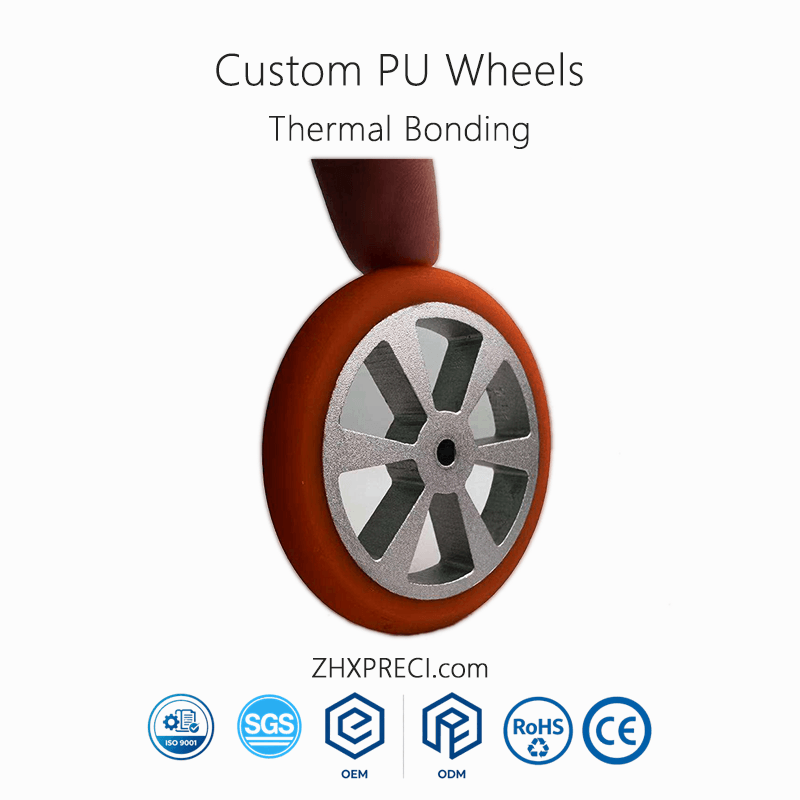
Our custom locking polyurethane wheels for X-ray carts are built around the daily reality of hospital corridors: constant pushing, sudden stops, and the need to hold a heavy imaging cart perfectly still while a patient is positioned. As a professional manufacturer and supplier based in China, we pair a precision ball bearing core with a polyurethane tread formulated for low rolling resistance and quiet running, and the total-lock brake — available as swivel lock or full wheel-and-swivel lock — keeps the cart anchored once the pedal is engaged. The advantage over a standard catalogue caster is measurable: our hardened steel cam and reinforced pedal arm hold the lock under repeated load cycles, which means fewer blurred images from drifting carts and less time lost to repeat scans. We build these wheels in our own factory, so diameter, tread hardness, bearing type, plate or stem mounting and colour can all be matched to your existing cart design rather than squeezed into a fixed size. Whether you need a trial batch or a wholesale volume order, our engineering team offers expert advice on load rating and hardness before you commit, and every production batch is checked against ISO 9001 procedures before dispatch.
Why Choose This Product
The locking mechanism is where most hospital cart wheels fail first. Our brake uses a hardened steel cam and a reinforced pedal arm, so the wheel locks under load instead of easing off after a few hundred cycles — a difference that matters for imaging departments where a cart must stay put during exposure, since a drifting cart means a blurred image and a repeated scan. The polyurethane tread, typically moulded at Shore A 85–95, rolls noticeably easier than a hard nylon or standard rubber wheel on vinyl and epoxy flooring, which reduces the push effort for radiographers moving several hundred kilograms of equipment all day. Because the tread is non-marking and resists water, mild cleaning agents and mineral oil, the wheel keeps its appearance in an environment where floors are wiped down several times a shift. We back this with retained batch samples and ISO 9001 records, so any performance question can be traced back to the original production data.
- Total-lock brake holds both the wheel and the swivel, so the cart stays fixed while the brake is engaged.
- Non-marking polyurethane tread leaves no scuff lines on hospital flooring.
- Quiet rolling performance, typically well below the noise level of a hard plastic wheel on the same floor.
- Full customization of diameter, hardness, bearing, mounting and colour for OEM and ODM projects.
- Precision bearings selected for smooth starting torque, which helps with fine positioning around a patient table.
- Direct factory pricing from our China production base, with wholesale and volume terms available.
Specifications
The table below shows our standard reference range for custom locking polyurethane wheels used on X-ray carts and similar medical equipment. Because every cart frame and brake pedal layout differs, we recommend confirming your requirements with us before ordering — we will suggest the most suitable combination for your load and floor conditions, and provide a price suggestion based on order volume.
| Parameter | Details |
|---|---|
| Product name | Custom locking polyurethane wheels for X-ray carts |
| Wheel diameter | 75 mm, 100 mm, 125 mm, 150 mm; other sizes available on request |
| Tread material | Polyurethane, typically Shore A 85–95, adjusted to your load and floor type |
| Wheel core | Aluminium alloy, stainless steel or nylon, depending on load and hygiene requirements |
| Bearing type | Precision ball bearing or stainless steel bearing for wet cleaning environments |
| Mounting style | Swivel plate with total-lock brake, threaded stem, or bolt-hole fixing |
| Brake function | Total lock as standard; directional lock and swivel-only lock available |
| Load capacity | Commonly 60–150 kg per wheel, varying with diameter, tread hardness and mounting |
| Colour | Grey, black, or matched to your brand colour |
| Compliance | Produced under ISO 9001 quality procedures; materials can be supplied RoHS compliant |
| Minimum order | Usually 200 pieces per size for custom runs; smaller trial quantities can be discussed |
| Lead time | Typically 15–25 days after order confirmation, subject to material supply and production schedule |
| Packaging | Inner carton with outer carton or pallet; private label and custom packaging available |
Product Detail Views
Because these wheels are made to order, the most useful reference material is a set of detail views rather than a single catalogue photo. On request we share close-up images of the brake cam and pedal assembly, the bearing seat and core bonding line, the tread surface finish, and a dimension drawing with mounting hole spacing for your frame. We can also supply a short running video showing the brake engagement and the rolling noise level on a hard floor, which many medical equipment builders find easier to evaluate than a written specification. Send us your cart drawing or a sample wheel, and we will photograph and confirm the matching dimensions before tooling starts.


Material Properties
Polyurethane behaves differently depending on hardness, so the values below should be read as a practical guide rather than a fixed guarantee. We will confirm the final compound with you based on your load, floor surface and cleaning routine, and our team is glad to offer advice on which hardness suits your specific X-ray cart design.
| Property | Typical Performance |
|---|---|
| Tread hardness | Shore A 85–95; softer compounds roll more quietly, harder compounds carry more load |
| Abrasion resistance | Good for indoor medical use; polyurethane generally outlasts standard rubber under repeated rolling |
| Rolling resistance | Low, which reduces push effort on vinyl, epoxy and tile floors |
| Noise level | Typically around 55 dB or lower on a smooth floor, depending on speed and load |
| Chemical resistance | Resists water, mild detergents, alcohol-based cleaners and mineral oil; strong solvents should be avoided |
| Operating temperature | Commonly -20°C to +70°C; other ranges available with alternative compounds |
| Floor protection | Non-marking tread that will not leave black streaks on light-coloured hospital flooring |
| Core bonding | Mechanically keyed and chemically bonded to reduce separation risk under side loads |
About Us
We are a China-based manufacturer and supplier of polyurethane wheels and casters for medical, industrial and material handling applications, serving overseas buyers since 2009. Our focus is on custom projects rather than pure catalogue trade: customers come to us with a cart frame, a load figure and a floor type, and our engineers work out the wheel geometry, hardness and bearing combination that fits. That approach has made us a long-term OEM and ODM partner for several medical equipment brands in Europe and North America. Our export team handles documentation, inspection coordination and shipping to most major ports, and we are happy to provide samples and price suggestions for your market before you place a volume order.


Factory and Equipment
Production runs in our own workshop, which keeps tooling costs and lead times under our direct control instead of adding a third-party layer. Key equipment includes polyurethane casting and injection lines, CNC machining centres for cores and bearing seats, bonding and curing ovens, and a dedicated assembly bench for brake units. A separate inspection area handles dimensional checks, brake cycle testing and rolling performance trials. Because we control the whole process, we can adjust a compound or modify a brake spring without waiting on an outside supplier — a practical advantage when a customer needs a fast revision during a new cart project.
- In-house polyurethane casting and injection for consistent hardness control
- CNC machining of aluminium and stainless steel cores
- Controlled curing ovens to stabilise tread hardness
- Brake bench testing with repeated engagement cycles
- Dimensional inspection against drawings before packing


Certifications and Quality Control
Our factory operates under ISO 9001 quality management procedures, and material documentation such as RoHS compliance statements can be provided for medical equipment projects. Every production batch is checked at three points: incoming raw materials, in-process dimensions after core bonding, and final assembly of the brake mechanism. Retained samples are kept from each batch so that if a question arises months later, we can compare the delivered wheels against the original sample. Third-party inspection before shipment can be arranged at your request.


Production and Inventory Policy
Lead time: Actual lead time is affected by raw material supply, machine scheduling and peak season workload, so it can vary within a reasonable range. Once your order is confirmed, we will give you the most accurate delivery estimate we can and keep you updated as production progresses.
Stock status: We generally do not hold finished stock, though a limited number of fast-moving standard sizes may be available. Real stock levels change continuously with sales and production, so please contact us to confirm current availability before placing an order.
Bulk and urgent orders: For large volume orders or tight deadlines, please talk to us early about capacity and scheduling. We will do our best to match your timeline and will tell you honestly if a date is not achievable.
Frequently Asked Questions
Can these custom locking polyurethane wheels be fitted to existing X-ray carts?
In most cases yes. The critical points are the mounting pattern, the wheel diameter and the overall height, because those determine whether the cart still sits level and whether the brake pedal clears the frame. Send us a photo of the current caster along with hole spacing and wheel diameter, and we will confirm a matching specification or propose a small adapter plate. This is one of the most common requests we handle for X-ray cart manufacturers, and it usually avoids the cost of redesigning the cart.
How do I choose the right polyurethane hardness for my equipment?
Hardness is a trade-off between rolling ease and load capacity. A softer compound around Shore A 85 rolls more quietly and starts moving with less effort, which suits lighter carts and smooth indoor floors. A harder compound around Shore A 95 carries more weight and resists flat spotting better, but transmits slightly more noise and vibration. For an X-ray cart that is pushed frequently but must stay stable when locked, we usually recommend the middle of the range and confirm it against your actual load per wheel.
What is your minimum order quantity for custom wheels?
For custom sizes or a new brake configuration, we usually ask for around 200 pieces per size to cover tooling and setup. If you need a smaller quantity for a prototype or a validation build, tell us and we will look for a workable solution, sometimes by combining your requirement with an existing mould. OEM and ODM projects can be structured in stages so you are not committing to large volume before testing.
Do you support OEM and ODM customization?
Yes. We regularly produce under customer brands with logo marking on the wheel or the packaging, and we can develop a new wheel from your drawing, sample or performance requirement. Typical customizations include diameter, tread hardness and colour, aluminium or stainless steel cores, stainless bearings for wash-down areas, brake pedal shape, and private label packaging. Share your specification and target price range, and our team will advise on what is realistic before tooling begins.
How do you control quality before shipment?
Each batch goes through incoming material checks, in-process dimensional inspection after core bonding, and final testing of the brake unit, including repeated engagement cycles to confirm the lock holds. A retained sample from every batch stays in our workshop for future reference. If you prefer, we can also arrange third-party inspection before the goods leave the factory, and we will supply inspection reports and material certificates on request.
What payment methods and shipping options do you accept?
We commonly work with T/T bank transfer and can discuss other terms for established customers. Shipments go by sea, air or express courier depending on volume and urgency, and we can quote FOB, CIF or door-to-door arrangements. For first orders we usually recommend a small air or express shipment so you can test the wheels on a real cart before committing to a full container.
Will the wheels mark or damage hospital flooring?
The polyurethane tread we use for medical carts is non-marking, so it will not leave black streaks on vinyl, linoleum or sealed epoxy floors. The tread is also formulated to resist water and mild cleaning agents, which helps it keep its surface in areas that are cleaned frequently. We recommend avoiding strong solvent-based cleaners directly on the tread, as prolonged contact can soften the surface over time.
Can you supply samples before a volume order?
Yes. For standard configurations we can usually send a sample wheel quickly, and for custom specifications we will produce a sample after confirming the drawing and hardness. Samples are normally charged at a reasonable unit price plus freight, and we can discuss crediting part of that cost against your first volume order. Testing a sample on your own cart is the most reliable way to confirm brake feel and rolling performance before you buy in quantity.
Looking for a Reliable Wheel Manufacturing Partner?
If you are specifying wheels for a new X-ray cart or replacing casters that keep failing in service, our team can help you get the details right the first time. Send us your cart drawing, load requirement and floor type, and we will come back with a recommended specification, sample arrangement and a clear price suggestion for your market. As a professional custom solution provider in China, we support projects from the first drawing through to repeat production, with honest communication at every stage.
Reviews
There are no reviews yet.