


Description
Custom Noise Reducing Polyurethane Wheels For Studio Conveyors
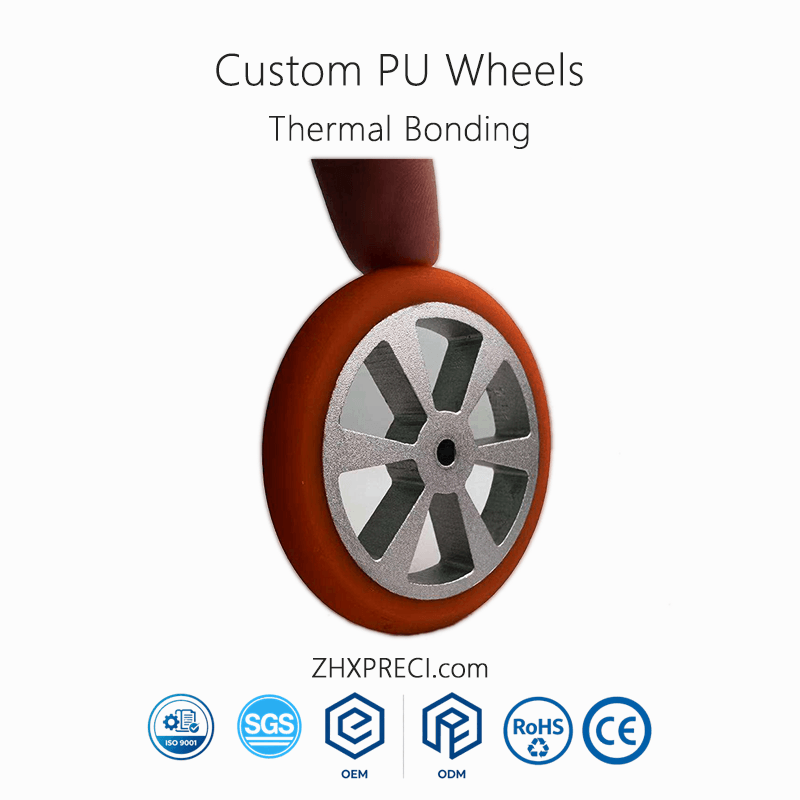
These custom noise reducing polyurethane wheels for studio conveyors are engineered for broadcast studios, film and TV sets, and quiet material-handling lines where rolling noise and vibration would otherwise ruin a take or disturb the working floor. Each wheel pairs a CNC-machined aluminum alloy or steel hub with a cast polyurethane tread we compound in our own factory at a typical hardness of Shore A 70 ± 5 — a range we adjust to your conveyor speed, load and floor surface so that contact noise stays low without giving up load capacity. Compared with solid nylon or hard rubber wheels, the damped PU tread absorbs surface vibration and leaves no black marking on painted floors, while sealed precision bearings and a concentricity tolerance of 0.05 mm keep runout small enough for smooth camera dolly and conveyor movement. We supply these wheels for sale at competitive wholesale prices with full OEM/ODM customization on diameter, tread profile, bore and bearing type, and our engineers give expert advice on hardness and profile selection before you commit to a production run.
Why Choose This Product
Each wheel combines a machined aluminum or steel hub with a cast polyurethane tread formulated for low noise and non-marking performance. That combination reduces vibration on studio conveyors, protects painted floors and keeps dolly tracking stable during repeated takes. Batch hardness checks, ISO9001-based production and RoHS-compliant material options provide the evidence buyers need before scaling a custom order.
- Quiet running is a top priority on studio sets, and this tread compound was developed for exactly that: the cast PU at Shore A 70 ± 5 absorbs floor vibration instead of transmitting it, and in our in-house conveyor test a set of these wheels typically measures around 55 dB at 1 m — noticeably calmer than rigid nylon wheels on the same track.
- Precision hub and bore: the aluminum alloy hub is machined to an H7 bore tolerance with tread concentricity held to 0.05 mm, which reduces wobble and keeps dolly tracking and conveyor alignment stable shot after shot.
- Non-marking, low-residue tread: the compound is formulated to stay clean on painted studio floors, cycloramas and track rails, so there is no re-painting between takes and no residue to scrub off.
- A genuine custom solution from a professional manufacturer: we build to your drawing for diameter, tread width, hardness, colour, bearing type and mounting style, with OEM/ODM projects handled from sample to serial production.
- Verified quality: hardness and abrasion are checked batch by batch in our factory lab, the plant runs to ISO9001 practice, and RoHS-compliant material is available on request.
- Fair value for volume buyers: because we produce the PU ourselves rather than reselling, wholesale pricing stays competitive against imported alternatives at the same tolerance level.
Specifications
The table below lists the typical configuration of our custom noise reducing polyurethane wheels for studio conveyors. Diameter, hardness, bore and bearing are all open to customization, so treat these figures as a starting point for your own customized specification.
| Parameter | Typical Value / Options |
|---|---|
| Product | Custom noise reducing polyurethane wheels for studio conveyors |
| Tread material | Cast polyurethane, custom formulation, non-marking |
| Tread hardness | Shore A 70 ± 5 (range 60–90 A available on request) |
| Hub material | Aluminum alloy (standard) or carbon steel (heavy-load option) |
| Wheel diameter | 50 mm to 200 mm, built to drawing |
| Tread width | 20 mm to 60 mm |
| Bore / bearing | 8–20 mm bore; sealed ball bearings, plain bore or custom shaft mount |
| Load capacity | 50–300 kg per wheel, depending on diameter and hub type |
| Bore tolerance | H7 |
| Tread concentricity | 0.05 mm or better |
| Rolling noise (in-house test) | Approx. 55 dB at 1 m on a reference conveyor, load and speed dependent |
| Operating temperature | -20 °C to +60 °C |
| Colour | Natural amber, black, grey or matched to your sample |
| Minimum order quantity | 50 pcs per size; trial quantities negotiable |
| Lead time | Usually 15–25 days after drawing approval and deposit |
Material Properties
Values below are typical for our standard Shore A 70 studio compound and are confirmed by batch testing in our factory lab. If your conveyor runs at higher speed or carries heavier loads, we will recommend a different hardness and profile rather than simply matching the sample.
| Property | Test Method | Typical Value |
|---|---|---|
| Hardness | ASTM D2240 | 70 ± 5 Shore A |
| Tensile strength | ASTM D412 | ≥ 30 MPa |
| Elongation at break | ASTM D412 | ≥ 450% |
| Tear strength | ASTM D624 | ≥ 60 kN/m |
| Abrasion loss | DIN 53516 | ≤ 50 mm³ |
| Rebound resilience | ASTM D2632 | 35–45% |
| Compression set | ASTM D395 | ≤ 25% |
| Density | In-house method | 1.10–1.15 g/cm³ |
Product Detail Images
Close-up detail views for these custom noise reducing polyurethane wheels cover the cast PU tread, the machined hub, the bearing seat and the ground running surface. If you need high-resolution photos or a short video for engineering review, our team can send them with the quotation so you can check tread finish and bore alignment before ordering.


Design Details and Construction
The construction is deliberately simple so that it stays reliable on a working studio floor. A machined hub carries the load, the cast PU tread is bonded directly onto the hub surface, and the bearing seat is finished after bonding so that bore and tread share the same axis. That order of operations is what holds concentricity to 0.05 mm and keeps the wheel quiet at speed.
- Hub: aluminum alloy with a machined bearing seat; steel hubs are available for heavier conveyor carts and dolly frames.
- Tread: cast polyurethane, mechanically and chemically bonded to the hub, then ground to final diameter for a true running surface.
- Bearing options: sealed deep-groove ball bearings for low drag, plain bore for shaft mounting, or a custom insert matched to your axle.
- Profile options: flat, light crown or radiused edge, depending on whether the wheel runs on a flat floor, a track rail or a guide channel.
About Us
We are a China-based manufacturer and supplier of custom polyurethane wheels and rollers, working with equipment builders, conveyor integrators and rental houses that serve the studio, logistics and automation markets. Our team has been producing cast PU components for more than a decade, and most of our business comes from OEM, ODM and OBM projects where the wheel has to fit an existing frame rather than the other way around. That means we are used to working from drawings, samples and application notes, and we will tell you honestly when a requested hardness or profile is not the right fit for your load and speed. For buyers comparing suppliers in the global market, we are happy to quote against your current specification so the price comparison is like for like.

Factory and Equipment
Production runs in our own China factory, covering casting, machining, bonding, grinding and assembly under one roof. Because the polyurethane is compounded in-house rather than bought in as finished sheet, we can adjust hardness and formulation between batches and keep the lead time on repeat orders predictable. Our equipment includes CNC lathes for hub machining, PU casting and curing stations, grinding lines for final diameter and concentricity, and a small test rig where wheels are run under load to check noise and runout before a batch is released. Visitors are welcome to inspect the line, and we can arrange third-party inspection before shipment if your purchasing process requires it.


Customer Visits
Buyers from Europe, North America and Southeast Asia visit our China factory to review PU casting, hub machining and concentricity testing before approving a production batch. If travel is not practical, we can arrange a live video tour or share visit and audit photos on request, so you can verify the line and the quality checks without a first trip.

Certifications and Quality Control
Our quality system follows ISO9001 practice, and material can be supplied with RoHS-compliance documentation when your market requires it. Every batch is checked for hardness, dimensions, bore tolerance and tread concentricity, and a sample from each run is put on the conveyor test rig for a noise and runout check. Inspection records travel with the shipment, so you have traceability if a question comes up months later. We do not claim that no wheel ever fails — we claim that the checks are consistent and that problems, if they appear, are handled quickly and openly.


Production and Inventory Policy
Lead time: Actual lead time depends on raw material supply, machining capacity and seasonal workload, so it moves within a reasonable range. Once an order is confirmed we give the most accurate delivery estimate we can and keep you updated as production progresses.
Stock status: We generally do not hold stock, although a limited number of popular standard sizes are kept on the shelf. Real stock levels change daily with sales and production, so please contact us to confirm current availability before ordering.
Bulk and urgent orders: For large volumes or tight deadlines, talk to us early about capacity and scheduling. We will do our best to fit your timeline and will say plainly if a date is not achievable.
Frequently Asked Questions
What actually makes these wheels quieter than standard conveyor wheels?
Two things work together: the compound and the geometry. The cast polyurethane tread at Shore A 70 ± 5 damps surface vibration instead of passing it into the hub, and the tread is ground concentric to the bore within 0.05 mm, so the wheel does not thump once per revolution. On our reference conveyor a set of these custom noise reducing polyurethane wheels for studio conveyors typically measures around 55 dB at 1 m. Exact figures depend on load, speed and floor finish, so we usually ask for your running conditions before recommending a hardness.
Can you customize diameter, hardness and bore for our conveyor frame?
Yes. Customization is the core of what we do: diameter from 50 mm to 200 mm, tread width from 20 mm to 60 mm, hardness from 60 to 90 Shore A, plus bore size, bearing type, hub material and colour. Send a drawing or a sample and our engineers will confirm feasibility and suggest the hardness and profile that suit your speed and load. OEM, ODM and OBM projects are all welcome.
How do I choose between Shore A 70 and a harder compound?
Softer compounds run quieter and grip better but deflect more under load; harder compounds carry more weight with less rolling resistance but transmit more vibration. For studio conveyors and camera dollies we usually start at Shore A 70, and move up to 80–85 A only when the load per wheel exceeds roughly 150 kg or the floor is unusually rough. As a professional manufacturer we would rather advise you correctly at the start than replace a batch later.
What is the minimum order quantity and typical lead time?
MOQ is normally 50 pcs per size, and smaller trial quantities can be discussed for first orders. Lead time is usually 15–25 days after drawing approval and deposit, longer for new tooling or special compounds. Because raw material supply and workshop load do vary, we confirm the schedule in writing when the order is placed.
How is pricing structured for wholesale and repeat orders?
Price depends on diameter, hub material, bearing type, hardness and order quantity, so we quote per specification rather than per catalogue number. Unit price drops at volume, and repeat orders on an unchanged drawing are usually the most competitive. If you are comparing suppliers, send us your current specification and target price and we will respond with an honest quotation and, where relevant, a suggestion on how to hit the cost target without compromising the running surface.
Can you supply samples before mass production?
Yes. We can produce sample wheels to your drawing or match an existing sample you send us, so you can test noise, grip and wear on your own conveyor before committing to volume. Sample cost and freight are normally charged and can be credited against a later bulk order — please confirm the arrangement with our sales team when you enquire.
How are the wheels packed and shipped?
Wheels are packed in individual protection, then in cartons on export pallets, with size and batch labels on each box. For sea freight we use fumigation-free pallets and can reinforce packing for long transit. Air and express shipping are available for samples and urgent orders. Let us know your market and delivery address and we will quote the shipping method that fits your timeline and budget.
What certifications and quality checks come with the order?
Production follows ISO9001 practice, and RoHS-compliance documents can be provided on request. Each batch is checked for hardness, dimensions, bore tolerance and tread concentricity, with a noise and runout sample test on our conveyor rig. Inspection records ship with the goods, and third-party inspection before shipment can be arranged if your purchasing process requires it.
Need a dependable manufacturing partner for quiet-running conveyor wheels? Tell us your diameter, load per wheel and floor surface, and we will come back with a specification suggestion, a sample plan and a wholesale price for your volume and market. Our team supports your project from drawing review through to delivery, including global shipping coordination, and we are glad to answer technical questions before you order.
Reviews
There are no reviews yet.