


Description
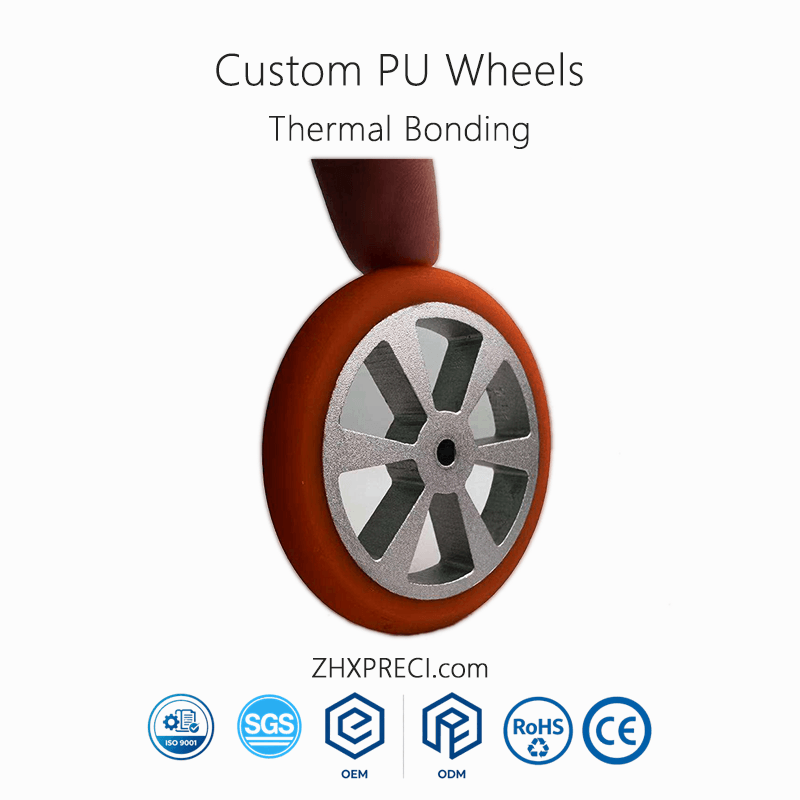
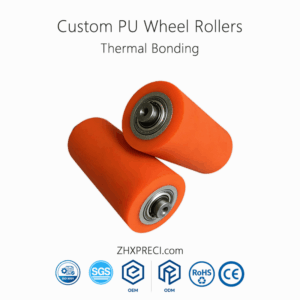
Custom Heat Resistant Polyurethane Wheels for Glass Kilns
These custom heat resistant polyurethane wheels are made for the hot, dusty and unforgiving working zones of glass kilns, where radiant heat, fine glass dust and constant start-stop loads wear ordinary wheels out far too quickly. Our engineers build the tread compound in our own China factory, using a heat-stabilised polyurethane formula that holds its hardness, rebound and load-bearing strength around annealing lehrs, hot-end conveyors and transfer trolleys. Compared with standard rubber or general-purpose PU wheels, the heat-stabilised tread resists hardening and flat-spotting, so your trolleys stay easy to push, positioning stays accurate and you spend far less on unplanned replacements. Each batch is cast and cured under controlled conditions, then checked for hardness, concentricity and running balance before shipment, which is why glass handling equipment builders and maintenance teams keep coming back to us as a dependable OEM and ODM supplier for custom work. Share your load, temperature and shaft drawing, and our team will give you expert advice plus a realistic price suggestion for your market, with wholesale volumes and sample orders available for sale.
Why Choose This Product
Glass kiln environments attack wheels from several directions at once. Heat softens or embrittles the tread, glass dust grinds away at rubber and bearings, and the wide temperature swings between cold start-up and full production make ordinary compounds crack or go glossy. The design choices below are the direct answer to those conditions.
- Heat-stabilised tread compound. We cure a polyurethane formula that keeps its hardness and resilience in continuous service temperatures of roughly 90 °C, and up to about 120 °C when a higher-grade compound or a protective heat shield is specified. Because the tread does not harden or take a flat spot, your transfer carts keep rolling smoothly and the wheels survive far more heating and cooling cycles than standard PU, cutting both downtime and spare-parts spend.
- Machined steel or aluminium cores. The hub is turned and welded in-house to your bore, keyway and flange drawing, so the wheel carries heavier loads and shrugs off impact better than solid plastic hubs. That means fewer cracked wheels when trolleys cross rough kiln floors or hit door sills, and less risk of a stoppage in the middle of a production shift.
- Sealed bearing options. Airborne glass dust is the main reason bearings fail early near the hot end. Sealed deep-groove ball bearings or tapered roller bearings keep grit out and grease in, extending service intervals and reducing the labour cost of routine wheel changes.
- Controlled geometry. After casting, the tread is ground and checked for concentricity, so the wheel runs true at moderate speeds. Lower vibration protects glass edges on the line and gives AGV and conveyor systems a more repeatable stopping position.
- Practical customisation. Diameter, tread width, hardness, colour, bore size, keyway, set-screw holes and mounting flanges are all made to order, and we support OEM, ODM and OBM projects from first sketch to packed delivery.
Specifications
The ranges below reflect our usual heat-resistant configurations. Final values are confirmed against your drawing and application data before production begins.
| Parameter | Typical specification |
|---|---|
| Product type | Custom heat resistant polyurethane wheel for glass kiln transfer trolleys and lehr conveyors |
| Tread material | Heat-stabilised polyurethane, 80A to 95A Shore A, colour and hardness made to order |
| Core and hub | Machined steel or aluminium, welded or bolted construction |
| Wheel diameter | 100 mm to 500 mm, other sizes on request |
| Tread width | 40 mm to 120 mm |
| Load capacity | Typically up to 1,500 kg per wheel, depending on diameter, speed and duty cycle |
| Service temperature | Up to 90 °C continuous as standard, up to about 120 °C with heat-resistant grade or heat shield |
| Bearing type | Sealed deep-groove ball bearing, tapered roller bearing, or plain bore |
| Bore and keyway | Machined to your drawing, including keyway, set-screw holes and mounting flanges |
| Concentricity | Within 0.1 mm, dynamic balancing available on request |
| Surface finish | Ground tread, optional grooving or crowned profile |
| Minimum order | 10 pieces for standard sizes, negotiable when new tooling is required |
| Quality system | ISO 9001 factory management, material report supplied with each batch |
| Packing | Export carton on pallet, wooden case for large or heavy sizes |
| Lead time | Usually 15 to 30 days after drawing confirmation, subject to material supply and season |
Product Details
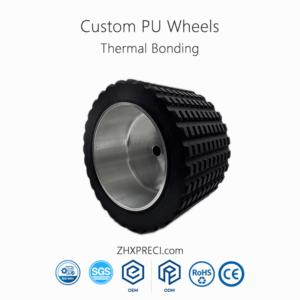
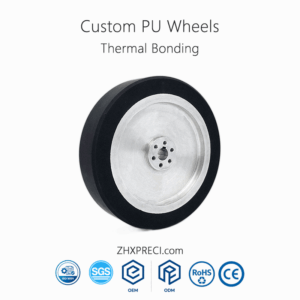
Tread and sidewall. The tread is cast around the core in a single pour, then ground to the final diameter and crowned where a self-centring run is needed. Grooving, ribbing or a smooth tread can be specified depending on floor condition and whether you need traction or easy cleaning near the kiln.
Core, bore and fixing. Hubs are machined to tolerance with the keyway, set-screw holes and flange layout shown on your drawing, so the wheel fits existing shafts without on-site rework.
Bearings and sealing. Sealed bearings are pressed and staked, and we can add labyrinth protection for the dustiest positions close to the hot end.
Dimension drawings, tread close-ups and short running videos are available on request, and we are glad to send a sample wheel for bench testing before you commit to a volume order.


Material Properties
Figures are typical ranges for our standard heat-resistant grades and shift with hardness, colour and curing cycle. A final data sheet is issued with the approved sample.
| Property | Typical value and test method |
|---|---|
| Hardness | 85A to 95A Shore A, ASTM D2240 |
| Tensile strength | 35 to 45 MPa, ASTM D412 |
| Tear strength | 60 to 90 kN/m, ASTM D624 |
| Abrasion loss | 30 to 60 mm³, DIN 53516 |
| Rebound resilience | 40 to 55 percent, ASTM D2632 |
| Compression set | Under 25 percent after 22 h at 70 °C, ASTM D395 |
| Heat ageing | Hardness change under 10 Shore A after 72 h at 100 °C in our in-house oven test |
| Oil and coolant resistance | Good to moderate, confirmed by immersion test with the fluid used on your line |
Higher hardness generally buys better load capacity and lower rolling resistance, but it also reduces grip and comfort on uneven floors. For kiln trolleys that carry heavy glass racks over long distances, a 90A to 93A tread with a steel core is the usual balance; where the floor is rough or the load is shock-loaded, a softer 85A compound with a thicker tread section often lasts longer.
About Us
We are a China based manufacturer and supplier of custom polyurethane and rubber wheels for industrial handling and high-temperature production lines. Our product range covers kiln and lehr trolley wheels, AGV and transfer cart wheels, roller assemblies and machined cores, all built to customer drawings rather than catalogue numbers. Working with glass plants, equipment builders and trading partners across export markets, we have learned that the real requirement is rarely a standard wheel, but a wheel that matches one specific floor, load and temperature profile.
That is why every enquiry starts with a short technical conversation instead of a quotation alone. Send the drawing, the load per wheel, the running speed and the ambient temperature at the wheel position, and our engineers will point out where a standard compound is good enough and where a heat-stabilised grade or a heat shield is worth the extra cost. We welcome customer visits to our factory and third-party inspection before shipment, and we are happy to work as a long-term OEM or ODM partner rather than a one-off seller.

Customer Visits and Factory Audits
Customers from glass equipment manufacturing and material handling markets are welcome to visit our factory for a technical review, sample inspection and production line walkthrough. For overseas buyers who cannot travel at short notice, we can share visit photos, audit records and live video walkthroughs on request, so you can evaluate our workshop and quality control before placing a volume order.

Factory and Equipment
Production runs through casting, curing, machining and inspection under one roof, which keeps lead times predictable and quality traceable. Our workshop is equipped with polyurethane casting and metering lines, CNC lathes and machining centres for cores and bores, tread grinding equipment, dynamic balancing machines and a hardness test bench. A small on-site oven allows us to run heat ageing checks on each new compound before it goes into series production.
Incoming steel and aluminium stock is checked for grade and dimensions, every cast batch is recorded with its hardness and curing data, and finished wheels are inspected for bore fit, concentricity and appearance before packing. For buyers who need documented evidence, we can arrange third-party inspection and issue material reports together with the shipment.
Photos and short process videos of our casting, CNC machining, grinding, balancing and inspection stations are available on request for customers reviewing a new supplier or preparing an internal approval file.


Certifications and Quality Control
Our factory operates under an ISO 9001 quality management system, and copies of the certificate plus material reports can be provided during the enquiry stage. Hardness, tensile and abrasion data are measured against the ASTM and DIN methods listed above, so you can compare our compounds with alternative suppliers on a like-for-like basis. Where a project needs independent verification, we support third-party testing such as SGS on request, and we will share the report before shipment rather than after arrival.
Certificate copies, batch inspection records and quality control photos can be supplied with quotations or before shipment, giving your purchasing team a clear record of the standard behind each custom heat resistant polyurethane wheel order.


Production and Inventory Policy
Lead time: Actual lead time is affected by raw material supply, machining capacity and peak-season workload, so it does move within a reasonable range. Once the order is confirmed we will give the most accurate delivery estimate we can and keep you updated throughout production.
Stock status: We generally build to order, though a number of fast-moving standard sizes are kept in stock. Actual stock levels change daily with sales and production, so please confirm current availability with our sales team before placing an order.
Bulk and urgent orders: For large volumes or tight schedules, please talk to us early about capacity and production slots. We will do our best to fit your timeline and will tell you honestly if a date cannot be met.
Frequently Asked Questions
What makes these custom heat resistant polyurethane wheels suitable for glass kiln environments?
The tread uses a heat-stabilised polyurethane compound that keeps its hardness and rebound at continuous temperatures around 90 °C, and up to roughly 120 °C with a higher-grade compound or a heat shield. That means the wheel does not harden, crack or take a flat spot when the line heats up and cools down, and the machined steel or aluminium core keeps the load on the bearing rather than on the tread. Sealed bearings keep abrasive glass dust out, which is the usual cause of early failure near the hot end.
Can you customise diameter, hardness, bore and keyway to our drawing?
Yes. Diameter, tread width, hardness from 80A to 95A, colour, bore size, keyway, set-screw holes and mounting flanges are all made to order. Send a 2D drawing or a sample wheel and we will confirm feasibility and tolerances before quoting. For special requirements our technical team will advise in advance whether the specification is practical, so there are no surprises at the sample stage.
What is the minimum order quantity and can we test a sample first?
The minimum is usually 10 pieces for standard sizes and negotiable when new tooling is needed. Samples are available, and we recommend bench testing one wheel under your real load and temperature before committing to volume, especially for a new kiln line. Sample cost is normally credited against the first bulk order.
How do you control quality before shipment?
Each cast batch is recorded with its hardness and curing data, and finished wheels are checked for bore fit, concentricity within 0.1 mm and appearance. Material reports accompany the shipment and third-party inspection can be arranged on request. Because we control casting, machining and grinding in one factory, we can trace a problem back to a specific batch rather than guess.
What is the typical lead time, and how do you handle urgent orders?
Standard sizes usually ship in 15 to 30 days after drawing confirmation, while new tooling adds time for sample approval. Lead time is influenced by raw material supply and season, so we confirm a realistic date with each order and update you if anything shifts. For urgent needs, tell us the deadline at the enquiry stage and we will check whether capacity allows an earlier slot.
Which payment and shipping terms do you accept?
We normally work with a deposit plus balance against the shipping documents, and can discuss other terms for repeat customers. Shipments go by sea, air or express courier depending on volume and urgency, and we can quote FOB, CIF or door-to-door options. Export packing is carton on pallet, with wooden cases for large or heavy wheels.
Do the wheels carry a warranty?
We stand behind the workmanship and the compound, and will replace any wheel that fails to match the approved sample or drawing specification. Wear life itself depends on load, floor condition, speed and temperature, so we prefer to agree a realistic expected service life with you at the sample stage rather than promise a fixed number. In practice, most disputes are avoided by testing one wheel first.
How do we get a price suggestion for our market?
Send the drawing or the key dimensions, the load per wheel, the running speed and the temperature at the wheel position. With that information our team can recommend the right hardness and core, confirm MOQ, and return a wholesale price that leaves room for your own margin. If you are comparing suppliers, we are also glad to review an alternative quotation and explain where the differences in cost usually come from.
Talk to Our Engineers About Your Kiln Line
Looking for a manufacturing partner who understands what heat and glass dust do to a wheel? Send us your drawing, load and temperature details, and we will come back with a practical recommendation, a sample plan and a wholesale price for your market. Whether you need a small trial batch or a full OEM or ODM programme, we are here to support your project from first sketch to delivery.
Reviews
There are no reviews yet.